Budapest vs Prague is closer than either city’s fans admit, so here’s the verdict first: pick Budapest for the baths, the river and late nights, and Prague for its medieval old town and its beer. If you’re visiting one of them for the first time with three or four days, Budapest wins by a nose, because it gives you more kinds of day. With a week, you don’t have to choose at all.
This guide puts both cities side by side using official 2026 prices, gives a verdict for each type of traveller, and shows how to do both by direct train. If Budapest wins, our 3-day Budapest itinerary turns the decision into a plan.
Some links in this guide are affiliate links. They don’t change your price and help keep the site running.
How do Budapest and Prague compare?#
Budapest and Prague cost about the same to get around, but they’re very different cities to spend time in: Budapest is a big river city with thermal baths, and Prague is a compact medieval old town built for walking. Here’s the side-by-side:
| Budapest | Prague | |
|---|---|---|
| Feel | Grand, spread across two banks of the Danube | Compact, medieval, walkable in a day |
| Headline ticket | Parliament: 14,000 HUF (€38) non-EU, 7,000 HUF (€19) EU | Prague Castle main circuit: 450 CZK (€18) |
| Free icons | Buda Castle grounds, the Danube embankment, the bridges | Prague Castle grounds, Charles Bridge, Old Town Square |
| Thermal baths | Several large public baths; Széchenyi from 13,200 HUF (€36) | None of the Budapest kind |
| Nightlife | Ruin bars open until about 4:00, no entry fee | Beer halls and pubs; Czech beer culture |
| Food | Paprika-heavy: gulyás, paprikás, lángos | Hearty: svíčková, pork knuckle, dumplings |
| 72-hour transport | 5,750 HUF (€16) | 350 CZK paper / 340 CZK app (€14) |
| Price level (Eurostat 2025, EU = 100) | Hungary 77.5 overall; 82.4 restaurants & hotels | Czechia 89.4 overall; 69.5 restaurants & hotels |
| Crowds | Spread over a large city | Concentrated on one route: castle, bridge, square |
| Currency | Forint (HUF) | Koruna (CZK); neither uses the euro |
| Between the two | Direct train about 6 h 50 min, every 2 hours, from €30 | Same train the other way |
Prices checked October 2026. Euro amounts are approximate: HUF at the site rate of 365 per euro, CZK at the Czech National Bank rate of 24.465 CZK per euro on 1 October 2026 (cnb.cz).
Verdict: Budapest for variety and evenings; Prague for a short, walkable, beautiful break. Neither wins on price.
Is Budapest cheaper than Prague?#
Budapest is slightly cheaper than Prague overall, but not for eating out or hotels, and not for the big sights. Eurostat’s 2025 price levels put Hungary’s household consumption at 77.5% of the EU average against 89.4% for Czechia, but for restaurants and hotels the order flips: Czechia 69.5, Hungary 82.4 (Eurostat). These are national figures, so treat them as a direction, not a city price tag.
Ticket by ticket, it looks like this:
| Budapest | Prague | |
|---|---|---|
| 30-minute ticket | 600 HUF (€1.60) | 39 CZK paper / 36 CZK app (€1.60 / €1.50) |
| 90-minute ticket | 850 HUF (€2.30), app only | 50 CZK paper / 46 CZK app (€2) |
| 24-hour ticket | 2,750 HUF (€7.50) | 150 CZK paper / 140 CZK app (€6) |
| 72-hour ticket | 5,750 HUF (€16) | 350 CZK paper / 340 CZK app (€14) |
| Children | Under 6 free with an adult | Under 15 free |
| Top ticketed sight | Parliament 14,000 HUF (€38) non-EU, 7,000 HUF (€19) EU/EEA | Prague Castle main circuit 450 CZK (€18), reduced 300 CZK (€12) |
| Thermal bath | Széchenyi 13,200 HUF (€36) Mon–Thu, 14,800 HUF (€41) Fri–Sun | — |
Prices checked October 2026 on bkk.hu, dpp.cz, parlament.jegymester.hu, the Prague Castle price list (450 CZK confirmed on prague.eu) and szechenyibath.hu.
The Prague Castle main circuit covers the Old Royal Palace, St George’s Basilica, Golden Lane and St Vitus Cathedral, and the ticket is valid for two days. The Budapest Parliament ticket buys a 45-minute guided tour. If you’re from outside the EU, that one ticket costs twice Prague’s.
For hotels, the average Budapest room cost 43,995 HUF (about €121) a night from January to July 2026, according to the Hungarian Hotel and Restaurant Association (MSZÉSZ). We found no comparable official average rate for Prague, so we won’t invent one. Our Budapest trip cost guide has daily budgets for three travel styles.
Verdict: a draw. Budapest is cheaper for groceries and everyday spending; Prague may come out cheaper for meals and rooms; and Budapest’s sights cost more. Choose on what you want to do, not on price.
Which city has better sights?#
Prague has the better old town, and Budapest has the better skyline. Prague’s highlights sit on one walkable line: the castle complex above the river (grounds open daily 6:00–22:00 and free), then down across Charles Bridge, which is free to walk, to Old Town Square and its astronomical clock. You can cover the core in two days, and it all looks as if it was designed for a postcard.
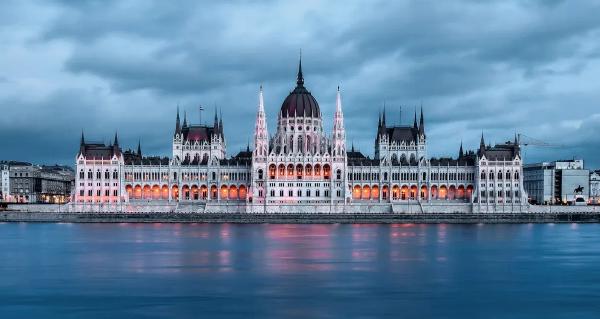
Budapest is bigger and spread across both banks. The Parliament (Országház), Buda Castle, Fisherman’s Bastion (Halászbástya), St Stephen’s Basilica and Andrássy Avenue are a tram ride or a long walk apart, and the Danube ties them together. The upper level of Fisherman’s Bastion is the only ticketed part (1,700 HUF, about €5); the rest of Castle Hill is free to wander. Our list of the best things to do in Budapest ranks them.
The river is Budapest’s trump card. The Parliament, Castle Hill and the bridges seen from the water at dusk beat anything on Prague’s Vltava for scale. A one-hour evening boat is the cheapest way to see it: the Historical Cruise with Welcome Drink on a paddle steamer is a good, low-cost pick.
Verdict: Prague if you want medieval streets and Gothic spires; Budapest if you want grand 19th-century boulevards and the best river view in central Europe.
Does Prague have thermal baths like Budapest?#
No. Prague has no thermal-spring bathhouses on the Budapest model, and this is the one category where the comparison isn’t close. Budapest sits on more than a hundred thermal springs, and its public baths are where locals actually go. Czechia’s hot-spring spa culture lives in the West Bohemian spa towns, Karlovy Vary, Mariánské Lázně and Františkovy Lázně, which are on UNESCO’s Great Spa Towns of Europe list (Visit Czechia). They’re a trip of their own, not something you fit into an afternoon in Prague.
In Budapest, Széchenyi’s outdoor thermal pools stay at 36–38 °C all year, so a bath works in January as well as in July. Our guide to the best thermal baths in Budapest compares all of them. The one catch: Széchenyi and most other baths don’t admit children under 14, so families with young children lose Budapest’s biggest advantage.
Széchenyi Spa Tickets with Optional Upgrades
Book this if your dates might change: GetYourGuide’s ticket comes with free cancellation, while official tickets bought on szechenyibath.hu can’t be refunded. If your plans are fixed, the official ticket (13,200 HUF Monday to Thursday) is the cheaper choice.
Verdict: if a thermal bath is on your list, the decision is made. Go to Budapest.
Is Budapest or Prague better for nightlife?#
Budapest is better for nightlife if you want late nights and atmosphere; Prague is better if you want beer. Budapest’s ruin bars fill old courtyard buildings in District VII (Erzsébetváros). Szimpla Kert, the first of them, charges no entry on ordinary nights and stays open until about 4:00. There’s nothing quite like them in Prague. Our guide to Budapest’s ruin bars lists the ones still open and their house rules.
Prague’s strength is the pub. Czech beer culture is the real thing, and a long evening in a traditional beer hall is the city’s signature night out. If you want clubs, both cities have them. The ruin bars are what Budapest has that Prague doesn’t.
Verdict: Budapest for a night that ends at 4:00; Prague for a night that’s mostly about the beer.
What about food?#
Hungarian food is the more distinctive of the two. Paprika runs through gulyás, chicken paprikás and stuffed peppers, and street food such as lángos (fried dough with sour cream and cheese) has no Czech equivalent. A bowl of gulyás costs 3,590 HUF (about €10) at Menza on Liszt Ferenc tér. Our guide to Hungarian food covers what to order and where. Czech cooking is heartier and plainer: svíčková (beef in a cream sauce with dumplings), pork knuckle and roast duck, best eaten with a Czech lager.
Verdict: Budapest for food, Prague for beer. Wine drinkers should lean Budapest.
Which city is more crowded?#
Prague feels more crowded, because its sights are packed onto one short route. In 2025, Prague’s hotels, hostels and other collective accommodation registered a record 8.27 million guests and 18.98 million nights, 81% of the guests from abroad, according to the Czech Statistical Office (published 9 February 2026). Most of those visitors walk the same line from the castle to Old Town Square, so Charles Bridge is at its most crowded in the middle of the day.
Budapest gets fewer overnight stays on a like-for-like count: its hotels, hostels and other commercial accommodation registered 11.6 million guest nights in 2025 (18.3 million counting private rentals), according to the Hungarian Central Statistical Office (our sum of its monthly figures; the two countries count slightly differently). But its sights are spread across a much larger city, so the crowds thin out between them. The exceptions are Fisherman’s Bastion at sunset and Széchenyi on summer weekends. For the quietest months in Budapest, see our guide to the best time to visit Budapest.
Choose Budapest if… / choose Prague if…#
Choose Budapest if:
- you want a thermal bath, especially in winter
- you like late nights and bars with character
- you care about food and wine as much as sights
- you want river views and grand architecture
- you have three or four days and want each one to feel different
Choose Prague if:
- a medieval old town is the whole point
- you have only two or three days and want to walk everything
- you’re travelling with children under 15: they ride Prague’s public transport free, and Budapest’s baths are closed to under-14s
- beer halls beat cocktail bars for you
- you’re a non-EU visitor on a tight budget for sights
| Traveller | Pick | Why |
|---|---|---|
| First trip, one city, 3–4 days | Budapest | More kinds of day: baths, river, castle, ruin bars |
| Short weekend (2 days) | Prague | The core is compact enough to see properly |
| Couples | Budapest, narrowly | Baths and a river at night; Prague is the romantic runner-up |
| Groups out for nightlife | Budapest | Ruin bars open until 4:00 |
| Families with children under 14 | Prague | Free transport for under-15s; most Budapest baths are off-limits |
| Architecture and history lovers | Prague | Medieval and Gothic, largely intact |
| Winter travellers | Budapest | Hot outdoor pools in the cold |
Can you visit Budapest and Prague on one trip?#
Yes. Direct daytime trains link Budapest-Nyugati and Prague every two hours, taking about 6 hours 50 minutes over 613 km via Bratislava and Brno. MÁV says they have a dining car and carry bikes. The journey uses up only one day of a week-long trip. Most of them are named Metropolitan.
| Budapest-Nyugati → Prague | Prague → Budapest-Nyugati |
|---|---|
| 5:30 → 12:23 | 5:37 → 12:28 |
| 7:30 → 14:26 (Praha-Holešovice) | 7:37 → 14:28 |
| 9:30 → 16:23 | 9:37 → 16:28 |
| 11:30 → 18:23 | 11:37 → 18:28 |
| 13:30 → 20:23 | 13:37 → 20:28 |
| 15:30 → 22:23 | 15:36 (Praha-Holešovice) → 22:28 |
| 17:30 → 0:25 | — |
| Night train 19:30 → 3:09 | Night train 0:36 → 8:29 |
Times from MÁV’s Budapest–Prague timetable (August 2026 edition); Prague trains use Praha hlavní nádraží unless marked. Fares from MÁV’s Czech Republic page, checked October 2026. A new timetable starts on 13 December 2026.
Tickets: MÁV’s advance START Europa fares to Prague start at €30 one way in second class. They’re tied to one train and non-refundable. The START Europa Plus starts at €37 and can be refunded until the day of travel. Children aged 6–15 travelling with a START Europa adult pay €5 in second class. Buy on jegy.mav.hu or in the MÁV app, where you pay in forints. The private operator RegioJet also runs a few trains a day via Vienna and Győr to Budapest-Kelenföld and Déli, advertising fares from 399 CZK (about €16) on regiojet.com.
The night train sounds romantic and mostly isn’t, for this trip. It reaches Prague at 3:09, which is no time to arrive anywhere. The other way, the 0:36 from Prague gets into Nyugati at 8:29, which works if you’d rather sleep than lose a day. MÁV lists couchettes from €47.
A one-week plan for both cities#
Three nights in each city, with the train in the middle, is the simplest version:
| Days | Where | What |
|---|---|---|
| 1–3 | Budapest | Parliament, Castle Hill, a bath, the Jewish Quarter, an evening cruise |
| 4 | Train | 9:30 from Nyugati, into Prague at 16:23; Old Town Square at dusk |
| 5–7 | Prague | The castle (allow half a day), Charles Bridge early, Malá Strana, a beer hall |
Have eight or nine days? Go via Vienna instead. Budapest to Vienna takes about 2 hours 25 minutes from Kelenföld (our Vienna day-trip guide has the times and fares), and ČD’s direct Railjets run Vienna to Prague every two hours in under 4 hours (České dráhy). Austria has notified border controls on its Hungarian border until 15 March 2027, so carry a passport or ID card.
In Budapest, District V is the easiest base for a short stay (our where-to-stay guide compares every area); search hotels in District V or hotels in Prague 1, the Old Town and Lesser Town district, for the second leg.
In Prague, the official 450 CZK castle ticket is all most people need. If you’d like someone to tell you the stories behind the buildings, this is the guided option:
Prague: Castle Tour with Local Guide and Entry Ticket
A guided walk through the castle complex with admission to the main circuit buildings included. Worth it if the castle is your one big sight in Prague; otherwise the official ticket does the job for less.
View Tour →Is Prague safer than Budapest?#
Both cities are low-risk for visitors: in the Global Peace Index 2026, Czechia ranked 13th and Hungary 15th of 163 countries (Institute for Economics & Peace). In both, the realistic risks are pickpockets in crowds and overcharging in bars and taxis. Our Budapest safety guide covers the specific scams to watch for.
Who should skip the two-city trip?#
Skip doing both if you have five days or fewer: you’d lose a full day to the train and get a rushed half of each city. Pick one, using the table above. And if you only care about a medieval old town, skip Budapest for now and give Prague the whole trip. If you want to swim outdoors in hot water in January, there’s no Prague version of that.
FAQ#
Is Budapest cheaper than Prague?#
Slightly overall, but not for everything. Eurostat’s 2025 price levels put Hungary’s consumer prices at 77.5 percent of the EU average against 89.4 percent for Czechia, but restaurants and hotels came out cheaper in Czechia (69.5 against 82.4). Public transport costs about the same in both cities, and Budapest’s big sights cost more: a non-EU Parliament ticket is 14,000 HUF (about 38 euros) against 450 CZK (about 18 euros) for Prague Castle, as of October 2026.
Should I visit Budapest or Prague first?#
Choose Budapest if you want thermal baths, the Danube and late nights, and Prague if you want a compact medieval old town and Czech beer halls. For a first trip of three or four days in one city, Budapest gives you more kinds of day, from a morning in the baths to an evening on the river.
Is Budapest or Prague better for nightlife?#
Budapest is better for late nights and atmosphere: its ruin bars in District VII, such as Szimpla Kert, charge no entry on ordinary nights and stay open until about 4:00. Prague is better if your idea of a night out is a long session in a traditional beer hall.
How long is the train from Budapest to Prague?#
Direct daytime trains from Budapest-Nyugati to Prague take about 6 hours 50 minutes and run every two hours, from 5:30 to 17:30, as of October 2026. MÁV’s advance START Europa tickets start at 30 euros one way in second class. There is also one night train, but it reaches Prague at about 3:00.
Can you do Budapest and Prague in one week?#
Yes. Spend three nights in each city and use the middle day for the direct train, which takes about 6 hours 50 minutes. With eight or nine days, you can break the journey in Vienna: Budapest to Vienna takes about 2 hours 25 minutes and Vienna to Prague under 4 hours.
Which is prettier, Budapest or Prague?#
Prague is prettier up close: its medieval old town, Charles Bridge and castle form one walkable postcard. Budapest is grander at scale, with the Parliament, Buda Castle and the bridges lined up along a wide river, and it looks best from the water or the Buda hills at night.
Does Prague have thermal baths like Budapest?#
No. Prague has no thermal-spring bathhouses on the Budapest model. Czechia’s hot-spring spa culture is in the West Bohemian spa towns such as Karlovy Vary, which are on the UNESCO Great Spa Towns of Europe list. Budapest sits on more than a hundred thermal springs and has several large public baths, including Széchenyi.
Is Prague safer than Budapest?#
Both are low-risk cities for visitors. In the Global Peace Index 2026, Czechia ranked 13th and Hungary 15th of 163 countries. In both, the realistic risks are pickpockets in crowded areas and overcharging in bars and taxis, not violent crime.
Last verified: October 2026. Prices and timetables change — confirm with the operator before booking.