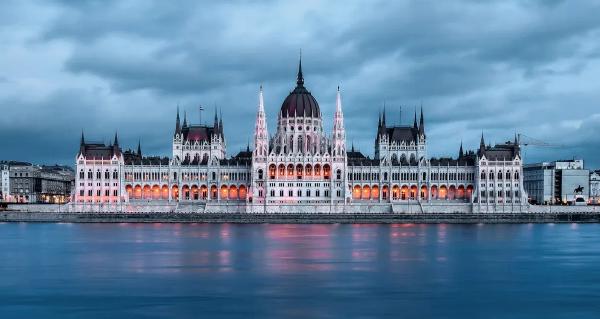
Is Budapest safe? For your body, very; for your wallet, mostly, provided you know the four or five ways visitors actually get caught out. None of them involves dark alleys. They involve a charming stranger who knows “a great bar”, a taxi that isn’t really a taxi, and a card machine offering to charge you in your home currency.
Below: what actually happens and what to do about it, based on UK, US and Australian government advice and the Hungarian police, as of October 2026. Still planning the trip itself? Start with our 3-day Budapest itinerary.
Is Budapest safe for tourists?#
Budapest is safe for tourists: violent crime against visitors is rare, and the main risks are petty theft and scams aimed at your money.
- The US State Department rates Hungary Level 1: Exercise normal precautions, the lowest of four levels (as of October 2026), and names pickpocketing in tourist areas and major train stations as the typical crime.
- Australia’s Smartraveller also says “exercise normal safety precautions”, its lowest level.
- The UK Foreign Office’s safety page for Hungary (current at 1 October 2026) lists pickpocketing, bar overcharging, drink spiking and card fraud.
- The Global Peace Index 2026 ranks Hungary 15th of 163 countries. The UK is 39th.
Verdict: you don’t need to plan around danger. You do need to plan around the scams below.
Which Budapest scams actually happen?#
The Budapest scams that actually hit visitors are the bar-bill scam, unlicensed taxis, poor-value currency conversion and pickpocketing; the rest are rare. Here they are side by side:
| Risk | Where it happens | How to avoid it | If it happens |
|---|---|---|---|
| Bar-bill scam (konzumlány) | Bars a stranger, app match or driver takes you to; often Districts VII and VIII | Choose your own bars; see prices before ordering | Pay only what you must to leave safely; call 112; report it |
| Unlicensed taxi | Airport arrivals hall, stations, outside bars at night | Yellow licensed taxi, Bolt or Uber | Note the plate; complain to BKK; report overcharging |
| Currency conversion (DCC) | Card terminals, ATMs | Always choose to pay in HUF | Nothing to recover; it’s a legal bad rate |
| Street exchange / bad kiosks | Tourist streets | Bank ATM, or a card | Gone; walk away next time |
| ATM “helpers” | ATMs in District VII at night | Refuse all help; use bank-branch ATMs | Call 112 and your bank |
| Pickpockets | Crowded trams, metro, stations, markets, bars | Front pocket, zipped bag, phone not on the table | Report to police for insurance; block cards |
| Riding without a valid ticket | Any BKK vehicle | Buy and validate first | Pay the 12,000 HUF penalty; get a receipt |
Verdict: the bar scam is the only one that costs serious money, and it’s also the easiest to avoid entirely.
How does the Budapest bar scam work?#
The Budapest bar scam works by luring you into a bar you didn’t choose, where the drinks your new companion orders appear on a bill of hundreds of euros, and staff pressure you to pay it. In Hungarian the women recruited to do the luring are called konzumlány (“consumption girls”), though the person who steers you there can just as easily be a friendly man or a taxi driver.
Someone starts a conversation on the street, or matches with you on a dating app, and suggests a place “just around the corner”. There’s no price list. Your companion orders cocktails or champagne. If you object to the bill, security staff appear, and sometimes you’re walked to a cash machine.
This is documented. The UK Foreign Office says some venues have taken tourists to ATMs to pay, and that some taxi drivers take a commission for recommending them; Smartraveller adds that disputes can turn violent. In February 2025, Budapest police arrested ten people accused of running this scheme in Districts VII and VIII: the women found targets on a dating app, one victim lost more than 1 million HUF (about €2,700) in a night, and police put the total damage at over 1 billion HUF across hundreds of victims (police.hu, Feb 2025).
The big, well-known ruin bars, with posted prices and crowds of visitors, aren’t the problem. Our ruin bars guide lists the ones that are open, and our District VII hotels guide covers what the area is like late at night.
How do you avoid taxi scams in Budapest?#
You avoid taxi scams in Budapest by using only yellow licensed taxis or an app, and never taking a ride from someone who approaches you. Licensed taxis charge one official tariff, the same day and night for every company. According to BKK’s taxi page, a licensed taxi has:
- a yellow body and yellow number plates;
- “minősített budapesti taxi” (qualified Budapest taxi) on the left front door;
- the official fare table on the dashboard and on the rear doors;
- an internal licence plate on the rear side windows with the taxi and driver numbers.
Since 1 August 2026 the fare is a 1,300 HUF flag fall, 520 HUF per kilometre and 130 HUF per minute when the car crawls below 15 km/h, with a 2,100 HUF base fare to or from the airport. The licensed companies are Bolt, City Taxi, Elit Taxi, Főtaxi and Uber Taxi; an app also gives you a record of the car.
Arriving by air? Our airport-to-city guide compares the 100E bus, taxis, Uber and shuttles with 2026 fares.
Should you use exchange kiosks or ATMs in Budapest?#
Use a bank ATM or simply pay by card in Budapest, and whenever a terminal or ATM offers to charge you in your home currency, decline and pay in forints (HUF). That offer is dynamic currency conversion (DCC): legal, but almost always a worse rate than your own bank’s. On ATMs, choose “without conversion”.
The UK Foreign Office says to use official ATMs or banks and never change money on the street. Kiosk rates vary widely, and a “0% commission” sign says nothing about the rate itself. Our guide to Budapest currency and tipping covers forints, euros and when to tip.
Where do pickpockets work in Budapest?#
Pickpockets in Budapest work where crowds are: busy trams, buses and the metro, railway stations, markets, events and packed bars. The police advise inside pockets for wallets and documents, closed bags kept in front of you, and no phones on street-side café tables. Pickpockets work in teams, so a sudden bump at a tram door is the moment to check your pocket.
If something is stolen, block your cards, then report it to the police for your insurance. The US State Department also flags passport theft on trains between Budapest, Vienna and Bratislava.
Are Budapest ticket inspectors a scam?#
Budapest ticket inspectors are not a scam: they’re real, they check often, and riding without a valid ticket costs a 12,000 HUF (about €33) penalty if you pay on the spot or within two working days, rising to 25,000 and then 50,000 HUF (BKK penalty fares). You can pay in cash, or by card if the inspector has a terminal, and BKK says the inspector must give you a receipt for an on-the-spot payment. The simplest defence is a valid ticket: our Budapest public transport guide explains which one to buy.
Is the service charge on Budapest bills a scam?#
A service charge on a Budapest restaurant bill is legal and common, not a scam, but it can’t be more than 15% on the receipt (NAV, the tax authority). Check the bill before you add a tip, or you may tip twice. If the charge is above 15%, or the bill doesn’t match the menu, ask calmly for an itemised receipt.
What areas should you avoid in Budapest?#
No central Budapest area is off limits, but take more care in the outer, eastern part of District VIII (Józsefváros) and around the main railway stations at night. District VIII’s 2025 police report recorded 4,047 crimes, down from 4,234 in 2024, and named Blaha Lujza tér, Rákóczi tér, Mátyás tér, Kálvária tér and Teleki tér as the places police focus on. The inner part of the district, the Palace District inside József körút, is quiet. Our budget hotels and hostels guide has the detail if you’re booking a cheap room there.
Keleti and Nyugati stations are busy and safe by day; late at night, keep your bags close and ignore unofficial taxi offers. District V (Belváros-Lipótváros) and the Castle District (District I) are the calmest central bases.
Is Budapest safe at night?#
Central Budapest is generally safe at night: the Danube embankments, District V and the District VII bar streets stay busy until late. The night-time risks are the ones above, concentrated: overpriced bars, unlicensed taxis outside venues, and drink spiking, which the UK and Australian governments both warn about. Buy your own drinks, keep them in sight, and don’t leave with someone you’ve just met to go to “another place”.
Some links in this guide are affiliate links. They don’t change your price and help keep the site running.
If you’d rather go out with people who know which bars are honest, a guided pub crawl is a low-effort option. The Pub Crawl & Ruin Bar Tour with VIP entry visits several bars with a guide, 18+ only. Our Budapest at night guide covers the alternatives, from night cruises to Castle Hill after dark.
How do you set up a low-risk trip?#
The lowest-risk Budapest trip starts with an official airport transfer and a central hotel. From the airport, the 100E bus or the official shared miniBUD shuttle, which drops you at your door, both avoid the arrivals-hall touts. For a calm, central base within walking distance of the river, look at hotels in District V (Belváros-Lipótváros).
A few rules that cost nothing:
- Carry your passport. The UK Foreign Office says to carry it for police ID checks.
- Don’t carry or buy drugs. Hungary has severe penalties, including for cannabis.
- Avoid large demonstrations, which can occasionally turn violent.
- Drink the tap water. Budapest Waterworks says the city’s drinking water meets Hungarian and EU standards (vizmuvek.hu), so bottled water is a choice, not a precaution.
What are the emergency numbers in Hungary?#
The emergency number in Hungary is 112, for police, ambulance and fire, and it’s answered 24 hours a day in Hungarian, English and German (katasztrofavedelem.hu). Tell the operator exactly where you are.
| Number | What it’s for |
|---|---|
| 112 | All emergencies: police, ambulance, fire (English spoken) |
| 107 / 104 / 105 | Police / ambulance / fire; still work, same call centres |
| 06 80 225 225 | Victim support line, 24/7, free (police.hu) |
| 06 80 555 111 | “Telephone Witness”: anonymous crime reports, 24/7 |
| +36 1 3 255 255 | BKK customer service, including taxi complaints |
For a non-emergency report, go to any police station or use the online forms on police.hu; victims have the right to an interpreter. British travellers can also call the FCDO’s 24-hour line in London on +44 20 7008 5000.
Verdict: save 112 in your phone, and you’ll very likely never use it.
FAQ#
Is Budapest safe for tourists?#
Yes. Budapest is a safe city for tourists, and the US State Department rates Hungary Level 1, its lowest advisory level. Violent crime against visitors is rare. The real risks are pickpocketing, bars that overcharge tourists, unlicensed taxis and poor exchange rates, and all four are easy to avoid.
Is Budapest safe at night?#
Central Budapest is generally safe at night, and the Danube embankments, District V and the District VII bar streets stay busy until late. Keep to lit, busy streets, use a licensed taxi, Bolt or Uber to get home, check drink prices before you order, and never leave a drink unattended.
Is Budapest safe for solo female travellers?#
Budapest is generally safe for solo female travellers, with the same precautions as any European capital. The UK and Australian governments warn about drink spiking in Budapest bars and clubs, so buy your own drinks and keep them in sight, and take a licensed taxi, Bolt or Uber home late at night.
What areas should you avoid in Budapest?#
No central area is off limits, but be more careful in the outer, eastern part of District VIII around Mátyás tér, Kálvária tér and Teleki tér, which the district’s 2025 police report names as trouble spots. Around the big railway stations at night, watch your bags and ignore taxi touts.
What is the most common scam in Budapest?#
Pickpocketing on crowded transport is the most common problem, and the most expensive scam is the bar-bill scam. A friendly stranger, often met in the street or on a dating app, suggests a bar where the bill turns out to be hundreds of euros, and staff pressure you to pay. Only drink in bars you chose yourself and check prices before ordering.
Is the tap water safe to drink in Budapest?#
Yes. Budapest Waterworks (Fővárosi Vízművek) says the city’s drinking water meets both Hungarian and EU requirements, so you can drink tap water and refill bottles anywhere in the city.
What is the emergency number in Hungary?#
Call 112 for police, ambulance or fire. In Hungary, 112 is answered 24 hours a day in Hungarian, English and German. The older numbers 107 (police), 104 (ambulance) and 105 (fire) still work and go to the same call centres.
Last verified: October 2026. Prices and timetables change — confirm with the operator before booking.